 Forward Financing
Emergency Fund or Personal Loan? How to Decide in a Real Crisis
By Tobias Reyes · Personal Loans · Back to Personal Loans loans
The water heater fails, the estimate reads $1,400, and your emergency fund holds $1,900. Every personal-finance book says the same thing here — that is what the fund is for, drain it proudly — and after years across a credit-counseling desk, I can tell you the books are answering the wrong question. The right question is not "can savings cover this emergency?" It is "what does this household look like the day after savings covers this emergency?" A family sitting on $500 of remaining buffer is one flat tire from a far worse crisis than the one they just paid cash for.
The floor concept: the number your fund must never cross
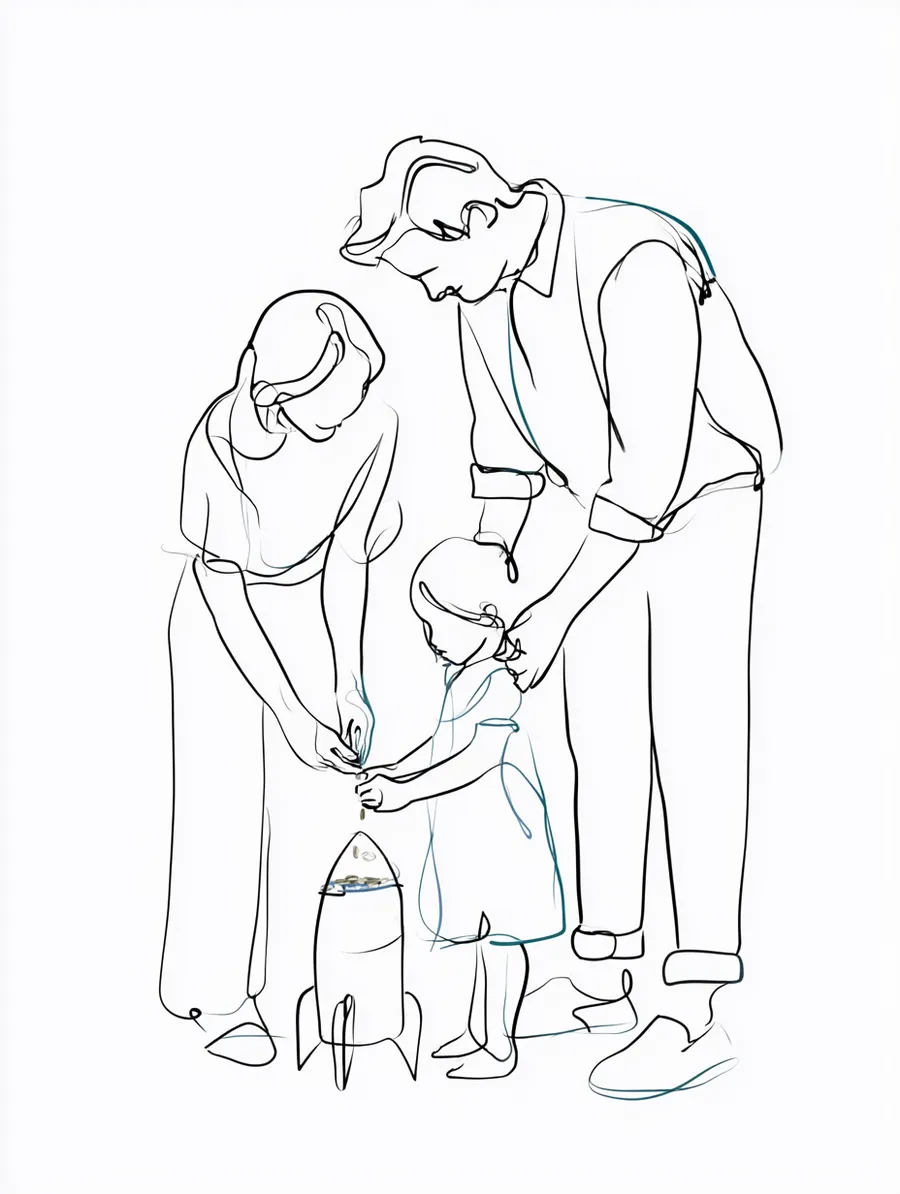
Calculate it once and it protects you forever: total your genuine monthly essentials (the first six jars of the jar method, if you have run it). For most households in the Forward Financing network's range, the floor lands between $1,500 and $3,000. Savings above the floor are deployable; savings below it are load-bearing walls. The floor is why "just use your emergency fund" is sometimes catastrophic advice — a fund that covers the emergency but crosses the floor has converted one visible crisis into a silent, standing vulnerability.
The decision grid: four situations, four answers
Emergency well under savings, floor intact afterward — pay cash. A $400 repair against a $2,600 fund with an $1,800 floor: spend the savings, skip the interest entirely, rebuild over two months. Borrowing here rents money you already own. Emergency near or above savings — borrow most of it. A $2,000 bill against a $2,200 fund: cash would leave $200 of buffer, which is a floor violation dressed as virtue. Finance the bulk, keep the fund standing, and direct the intact buffer at staying current on everything else. Emergency far above savings — borrow, and size the forward loan request precisely. When the transmission costs $3,200 and the fund holds $900, the personal loan does the heavy lifting; the fund's job becomes guarding the payments. Price the forward loan request from the actual written estimate, as the auto repair guide insists, and preview the payment on the calculator before signing anything. No fund at all — borrow the minimum, then build the floor. No shame in it; a third of American households live here. Finance the emergency lean, and treat the first $500 of post-crisis savings as the real project.
Naming the floor out loud
One behavioral trick multiplies the whole framework: give the floor its number in front of the household. A floor that exists as “$1,700, written on the savings account’s nickname” survives temptation and emergencies alike far better than a vague intention to keep something aside — partners defend a named line, apps display it, and the grid’s decisions become arithmetic anyone in the house can run. Vague floors leak; named floors hold. The renaming takes ninety seconds tonight.
The hybrid split most people miss
Return to the opening scenario: $1,400 emergency, $1,900 fund, floor of $1,500. Pure cash leaves $500 — a floor breach. Pure borrowing rents $1,400 you partially own. The split takes $400 from savings (stopping exactly at the floor) and finances $1,000. At 26% APR over 12 months, the $1,000 loan costs roughly $96 monthly and about $146 in total interest — versus around $205 in interest financing the full $1,400. The split saves real money, preserves the floor, and produces a payment small enough that rebuilding savings can happen alongside it. Nearly every emergency in the $500–$5,000 range has a split version, and it is almost always the adult in the room.
The floor’s enemies: three leaks that empty funds between emergencies
Counseling files show the pattern clearly: households that faced a crisis with an empty fund usually did not spend it on a crisis. Category creep drains it first — the “emergency” concert tickets, the “emergency” sale — and the defense is definitional: an emergency is unexpected, necessary, and urgent, all three, written on the account’s own nickname if that helps. Invisible autopays drain it second: a subscription or transfer quietly pointed at the savings account nibbles the floor monthly until the balance is a memory; a five-minute audit of what touches the account settles it. The self-loan drains it last and worst — borrowed “just until Friday” against the fund, unpapered and therefore unrepaid; if you must self-borrow, write the payback date down and treat it with the seriousness a lender would, because the alternative is discovering at the next furnace failure that past-you was a delinquent borrower. A floor defended from these three leaks is nearly always intact when the real test comes — which is the whole reason the grid above can work.
Speed matters, so decide before the crisis
Emergencies price urgency: the tow truck, the motel night, the missed shifts all bill by the hour, which is why this decision is best rehearsed calm. Know your floor number today. Know your likely APR band from the rates guide today. Confirm you would clear the eligibility checklist today — income proof findable, checking account steady. A household that has rehearsed can run the grid in ten minutes when the water heater actually dies, request the right amount through the form the same hour if borrowing wins, and per the Forward Financing network's typical timing have funds by the next business day. The unrehearsed household makes the same decision three days later, three hundred dollars poorer, under pressure.
The decision grid under real pressure: two case studies
Case one: the January furnace. Repair quote $1,650, savings $2,400, survival floor calculated months earlier at $1,700. The grid runs itself: pure cash would leave $750 — a $950 floor breach in the coldest month of the year, with the same furnace's siblings (car battery, pipes) statistically most likely to fail next. The split: $700 from savings, stopping precisely at the floor, and a $950 personal loan request through Forward Financing the same evening. At 27% APR over 12 months: roughly $91 a month, about $145 total interest — the price of keeping a full floor under a family in deep winter. Funds arrived the next business day; the furnace ran that weekend. The household's own review of the decision, months later: the $145 bought sleep, and sleep was underpriced.
Case two: the commuter's transmission. Estimate $3,100, savings $700, floor $1,600 — already breached before the crisis, as many are. The grid's fourth row applies: borrow the minimum that solves it, keep every savings dollar as payment insurance. The request: $3,100 plus a 10% buffer per the auto repair playbook, $3,400 total. The offer: 31% APR — challenged-credit pricing, honestly disclosed — over 24 months, about $190 monthly. The calculator confirmed the total near $4,560, and the alternative — no car, no shifts, $180 a day of gig income gone — priced worse within eight working days. The loan funded, the car worked, and the $700 fund did its new job twice that year, covering payment months when hours ran short. Neither case is pretty; both are what winning looks like when the emergency is real.
Building the fund while carrying the loan: the exact split
The competing-priorities question — rebuild savings or attack the loan? — has a cleaner answer than most advice admits. While the personal loan lives: currency is king. A missed payment costs late fees, bureau damage, and optionality all at once, so the monthly surplus leans hard toward guaranteeing the payment, with a small automated trickle — even $25 per pay period — keeping the savings habit alive rather than the balance impressive. Windfalls are different money psychologically and mathematically: the tax refund, the returned deposit, the surprise overtime split fifty-fifty, half to principal (where no-penalty prepayment converts it to deleted months), half to the floor. And the month the personal loan retires, the flip: the entire former payment redirects to savings by standing order, before lifestyle can claim it. A household that ran a $150 payment for 18 months and flips it whole rebuilds a $2,000 floor in under a year — arriving at the next emergency, and there is always a next one, on the grid's easiest row.
What this framework says about insurance, credit lines, and other tools
The fund-versus-loan question sits inside a larger toolkit, and the grid clarifies the neighbors too. Insurance is pre-paid emergency money for named disasters — where a deductible is the real exposure, the floor should be sized to the deductible, and several Forward Financing borrowers have used exactly that logic, financing a $2,000 deductible while a claim processed rather than draining the floor during the wait. Credit cards are the default emergency tool of the unprepared, and the grid demotes them deliberately: revolving a crisis at 27% with minimum payments engineered for years loses to a fixed personal loan with an end date in nearly every honest comparison our interest guide can construct. Family money carries the grid's only unpriceable risk — the relationship as collateral — and belongs, if used at all, behind written terms both sides would sign with strangers. The toolkit ranked: floor-protected savings first, structured forward loans for the gap, insurance doing its named jobs, cards for the month-sized and family for the never-if-avoidable. Households that internalize the ranking stop improvising under pressure — and improvisation under pressure is where emergencies do their expensive second round of damage.
And rehearsal has one more payoff: the grid decided calmly is the grid you can explain to your household in one minute — which, when the water heater actually dies, is worth as much as the funding speed Forward Financing brings to the other half of the plan.
Rebuilding: the part everyone skips
Whichever path wins, the emergency is not over when the bill is paid; it is over when the fund is whole again. Automate a modest transfer — even $40 per pay period — the same week the crisis resolves, because motivation decays faster than balances rebuild. If you borrowed, resist the urge to aggressively rebuild savings while carrying the loan at 26%; keep the transfer small, stay perfectly current on the payment, and let any true windfall — the tax refund, the old deposit returned — retire principal early, penalty-free with most lenders here. The goal is not just surviving this emergency. It is meeting the next one — and there is always a next one — with the floor intact, the grid rehearsed, and both tools, savings and credit, sharp in the drawer.
Keep Reading
Building a Monthly Budget That Makes Room for a Loan Payment
A jar-by-jar method for finding your true payment ceiling before you borrow a dollar.
Read next →
How Your Credit Score Shapes a Personal Loan Offer
What lenders actually see in your file and the ninety-day levers that move your number.
Read next →