 Forward Financing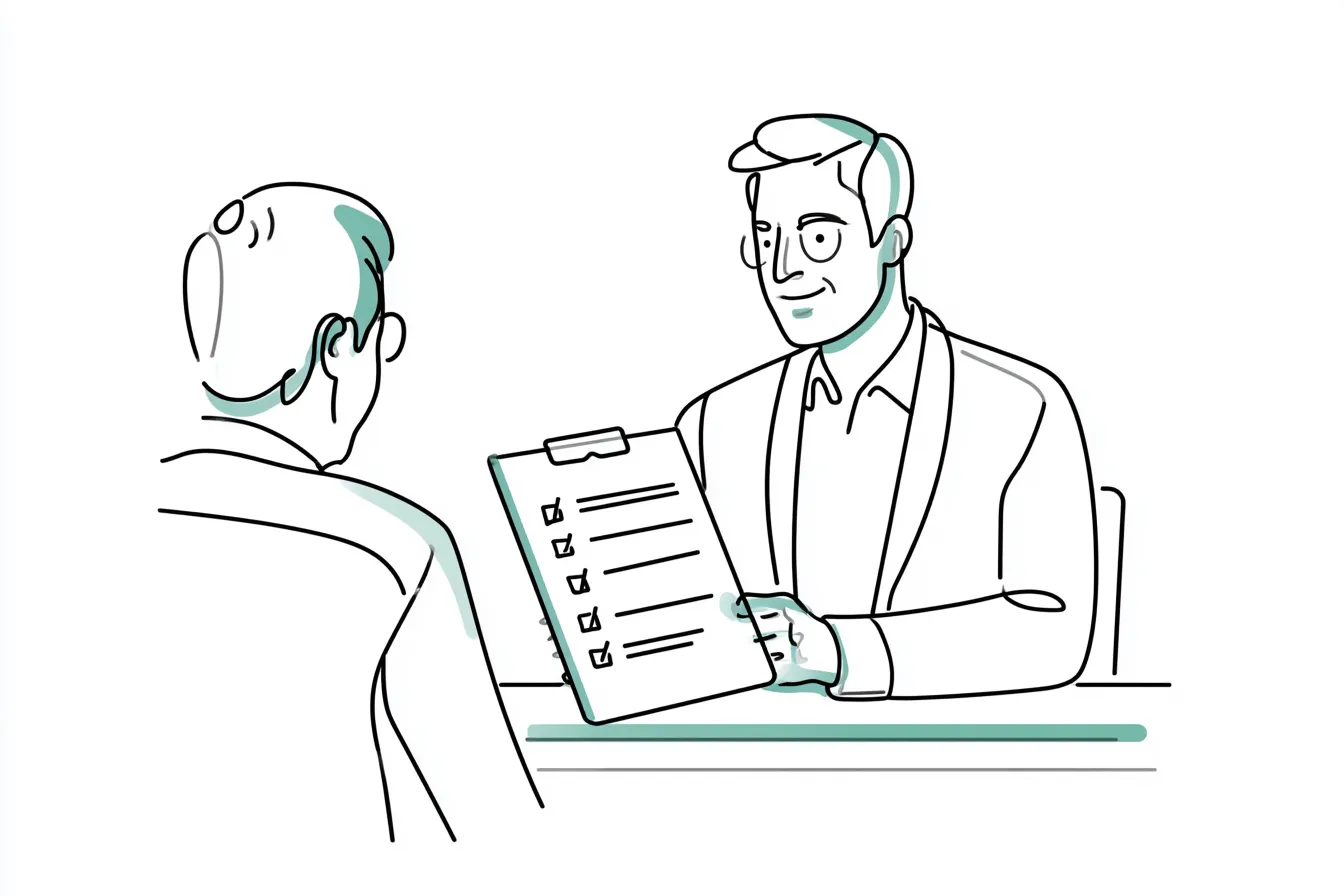
Personal Loan Eligibility: Exactly What Lenders Look For
Eligibility pages are usually written to be vague, because vague pages never disappoint anyone. This one takes the opposite approach: here is the actual checklist, the reasons behind each item, the documents that prove them, and the honest picture of how credit fits in — so you know where you stand before you spend five minutes on the request form.
The four baseline requirements
- Legal age. You must have reached the age of majority in your state — 18 in most states, 19 in a couple — because loan agreements are contracts and contracts require legal capacity.
- Verifiable regular income. Lenders need evidence that money arrives on a rhythm: wages, self-employment income, or qualifying benefits all count. Informal cash income is real money but hard to verify, and unverifiable income is invisible to underwriting.
- Active checking account. The account is the personal loan's plumbing — funds deposit into it and payments draw from it. It should be in your name, open for a few months, and free of recent overdrafts.
- Valid identification. A government-issued photo ID plus a Social Security or individual taxpayer identification number lets lenders meet the identity-verification obligations federal law places on them.

Income: how much, and how lenders count it
There is no single network-wide income floor — each lender sets its own — but requests supported by less than about $800 a month find few takers, and comfortable qualification usually begins around $1,000 monthly with room left after existing obligations. What counts is broader than a paycheck: W-2 wages, 1099 and gig earnings with deposit history, Social Security retirement and disability benefits, pension income, and in some cases documented court-ordered support. What matters as much as the amount is the pattern; underwriting reads your deposits like a heartbeat monitor, and steady beats impressive. A lender must also believe the new payment fits: if existing obligations already consume most of your income, approval odds drop regardless of the topline number — the debt-to-income logic explained on our rates page.
The document kit: gather these before you apply
Requests stall on missing paperwork more than on weak files, so assemble the kit first. Identity: driver's license, state ID, or passport. Income: your two most recent pay stubs, or for self-employment the last two or three bank statements showing deposits, or a current benefits award letter. Banking: routing and account numbers, straight from a check or your banking app. Contact: a phone and email you actually monitor, because verification questions arrive there and unanswered questions become expired requests. Ten minutes of gathering converts into a five-minute application and a faster decision.
What lenders may ask after the form — and what they never should
Legitimate post-submission requests are narrow and predictable: a clearer pay stub, a fuller bank statement, confirmation of an address or phone, occasionally a callback to verify employment. All of it flows through the lender’s own secure channels, references your actual request, and asks for documents rather than money. What no legitimate participant ever asks for is payment before funding, gift cards, wire transfers, or your online banking password — each is the signature of a scam wearing a lender’s clothes, and the correct response is to stop, verify the contact against your agreement or the contact page, and report the approach. The verification stage exists to prove you are you; nothing about it should ever require proving you can pay in advance.
Where credit really fits
This network exists in large part for borrowers the prime market turns away, so the credit conversation here is different. Most lenders run a soft inquiry at the forward loan request stage, which does not touch your score; a hard inquiry happens only if you proceed with a specific lender, and it is disclosed first. A low score narrows which lenders respond and raises the APR they quote — consequences that are real but survivable. What actually blocks funding is rarer: active bankruptcy proceedings, very recent defaults on similar loans, or files that fail identity verification. If that describes your situation, the honest advice is repair first, borrow second; our guide on credit scores and loan offers lays out the ninety-day improvements that move offers most.
The two-sided read: how you can verify what lenders verify
Underwriting holds no secret instruments; it reads documents you already own, which means the entire eligibility review can be rehearsed at your kitchen table. Open the banking app and read ninety days the way a lender will: deposit rhythm steady or ragged, overdrafts present or absent, income arriving in your own account or someone else’s. Pull the three bureau reports through the official free channel and read for errors and surprises — the dispute process in our credit score guide exists for exactly what this read finds. Total your monthly obligations against gross income for the napkin version of debt-to-income; under 40% travels well. Twenty minutes of rehearsal, and the request you submit is one whose answers you already know — which is, not coincidentally, the request that moves fastest through everything this page describes.
Special situations, answered plainly
Self-employed? Fully eligible — expect to show bank statements instead of stubs, and know that a longer deposit history reads better. On benefits? Social Security, disability, and pension income qualify with most lenders; bring the award letter. New to a job? Current verifiable income is what counts, though very short tenure may narrow your options; an offer letter helps, as noted in our moving loans guide for relocating workers. No credit history at all? Thin files can still qualify on income and banking strength, though the first offer will price cautiously. Not a citizen? Many lenders accept permanent residents and borrowers with valid taxpayer identification; requirements vary by lender and state.
Why each requirement exists: the lender's view, translated
Requirements read as bureaucracy until you see the question each one answers. Age is contract law, full stop — an agreement signed by a minor is unenforceable, so no lender anywhere will write one. Income is the repayment engine, but the question is subtler than "how much": underwriting asks whether the engine runs on a rhythm the payment can ride — which is why a modest, metronomic paycheck often outscores a larger, erratic one, and why the deposit pattern in your statements matters as much as the number on your stub. The checking account answers two questions at once: can funds move in and payments move out cleanly, and how has this household handled its cash lately? Ninety overdraft-free days is a quiet credential that no credit bureau records and nearly every small-dollar lender reads. Identification answers the law — federal rules oblige lenders to know their counterparty, and a file that stumbles on identity never reaches the questions it might have passed. Present each answer cleanly and a borderline file becomes a fundable one; the requirements were never a wall, only a questionnaire.
State residency: the requirement nobody mentions until it matters
Lending is regulated state by state, and every lender in the Forward Financing network operates a footprint — some serve most states, others a handful, and a few states' rules keep certain products out entirely. Practically, this means your state is a silent fifth requirement: it decides which lenders can even see your request, which products they may offer there, and in some cases the rate structures allowed. None of this requires action from you beyond entering your address honestly — the Forward Financing network routes around footprints automatically — but it explains two experiences borrowers report: why a friend in another state drew different offers on a similar file, and why a move can change what the same person qualifies for. If your forward loan request draws no acceptance, geography is occasionally the whole story, and the FAQ's guidance holds: circumstances change, requests are free, and the Forward Financing network's footprint itself evolves.
Strengthening a thin file: the ninety-day on-ramp
When the self-check below returns a "no," the repair sequence is nearly universal. Banking first: route every dollar of income through a checking account in your own name and hold the line against overdrafts — ninety clean days builds the behavioral record small-dollar underwriting trusts most. Income on paper: cash earnings are real but invisible; deposited earnings are evidence. Gig workers who shift to platform deposits and self-employed borrowers who invoice into their account convert the same money into qualifying money. Automate the past: autopay minimums on every existing obligation, because one fresh late payment undoes a month of rehabilitation. Audit the record: pull all three bureau reports free and dispute what is wrong — the mechanics live in our credit score guide. Households that run this on-ramp commonly cross from "not yet" to "qualified" inside a season, and cross into better pricing a season after that.
Eligibility for the personal loan vs. wisdom of the loan
One distinction this page insists on: qualifying for a personal loan and being well-served by one are different questions, and only you can answer the second. The network may happily fund a household whose jar budget shows no honest room for the payment — eligibility measures repayment capacity, not repayment comfort, and the gap between them is where borrower regret lives. So run both checks. The lender's check: age, income, banking, ID — this page. Your check: does the payment fit under your ceiling with slack for a bad month, does the total cost on the calculator price the problem fairly, and is this genuinely the cheapest workable path? Forward Financing's request form waits patiently behind both checks, and the borrowers who clear both are the ones whose reviews read calm two years later.
Eligibility at Forward Financing vs. the wider personal loan market
Context makes the checklist friendlier. Much of the personal loan market gates on credit score first — a bank personal loan commonly wants 660-plus before income even gets read. Forward Financing’s network inverts the order: the four requirements above open the door, and credit then prices the personal loan rather than blocking it, which is why a personal loan here reaches households the branch declined. The trade is stated plainly throughout this site — broader access, wider APR ranges — and it makes the self-check below more decisive than any score: pass it, and some personal loan offer is realistically available; fail it, and no personal loan anywhere funds until the failing item is fixed. Forward Financing would rather you know which case you are in tonight, for free, than discover it mid-application anywhere else.
Before you press submit: a sixty-second self-check
Run the checklist: of age in your state — yes or no. Income of roughly $1,000 monthly, provable on paper — yes or no. Checking account in your name without recent overdrafts — yes or no. ID and SSN or ITIN in hand — yes or no. Four yeses mean your forward loan request deserves the Forward Financing network's genuine consideration, and the form takes five minutes. A no means you now know exactly what to fix, which beats guessing. Either way, preview what a payment would look like with the calculator so the offer, when it comes, meets a prepared reader.