 Forward Financing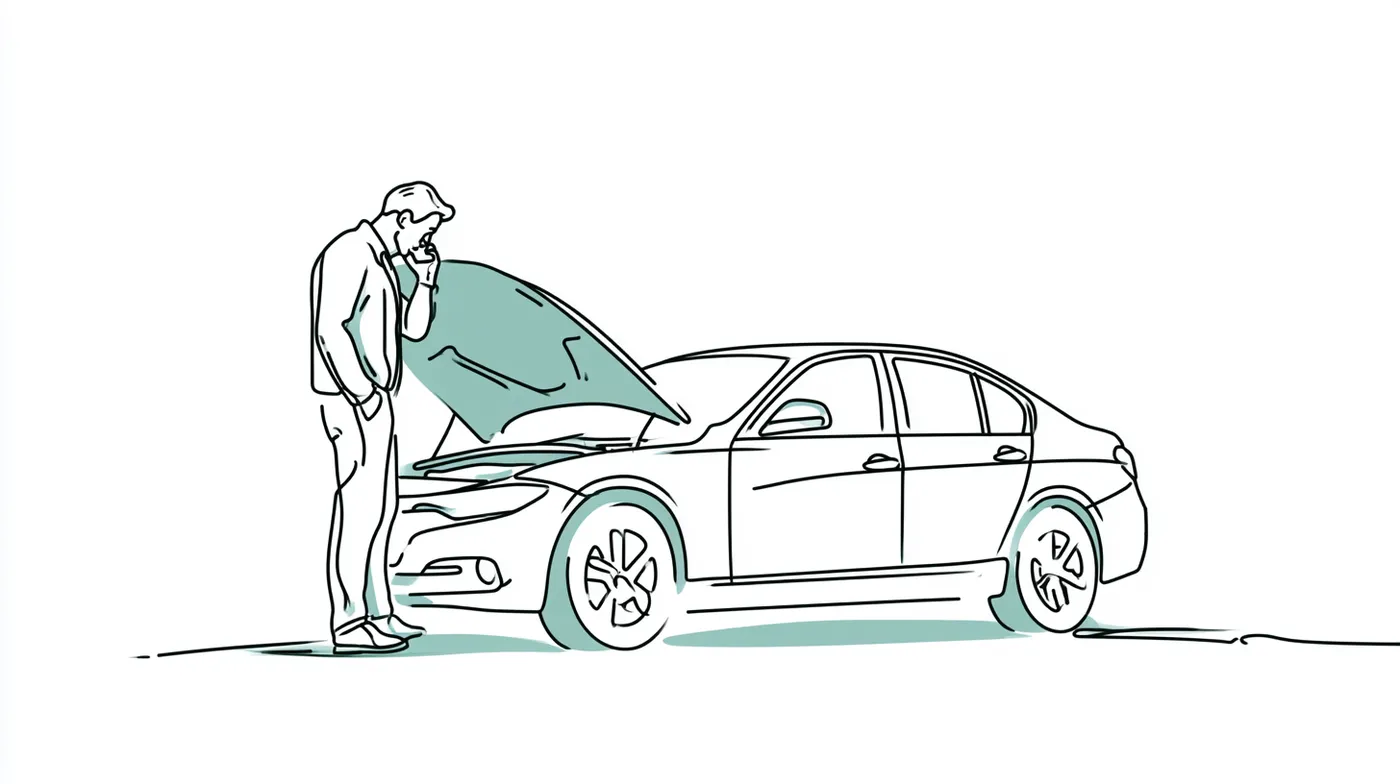
Broken Down: A Step-by-Step Money Plan for Sudden Car Trouble
By Janelle Whitmore · Auto Repair · Back to Auto Repair loans
A decade around service departments teaches you that breakdowns are not priced in the repair bay — they are priced in the panicked decisions of the first two days. The driver who authorizes "whatever it needs" over the phone, the one who tows twice because the first shop was a guess, the one who puts $2,400 on a card at 27% because the personal loan conversation felt too slow: each paid a premium no personal loan ever needed to carry. Here is the 48-hour plan that skips those premiums, hour by hour.
Hour zero: the roadside decisions
Safety first and fully — hazards on, well off the travel lanes, triangle or flares if you carry them. Then, before any tow is called, make one call that most drivers skip: your insurer or any roadside-assistance benefit on your policy, credit card, or phone plan. Millions of drivers pay for towing coverage they forget they own. If a tow is on you, know the pricing shape before the truck arrives: a hookup fee plus a per-mile rate, which makes where you tow the first money decision of the crisis. Tow to a shop you trust, not merely the nearest one — the difference of five miles is small; the difference between shops can be a thousand dollars.
Hours 2–24: diagnosis is a product — buy it properly
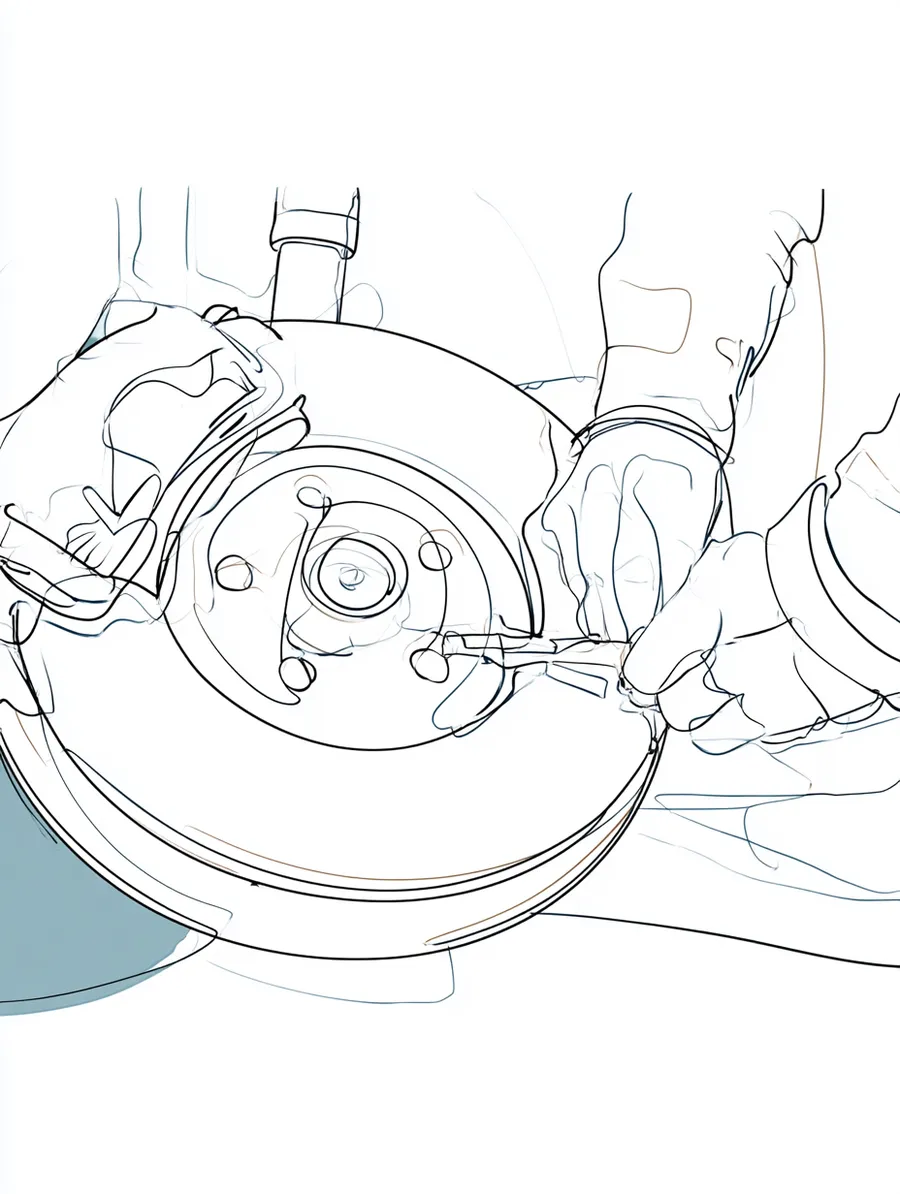
Good shops charge a diagnostic fee — commonly $75 to $150 — and the fee is legitimate; modern diagnosis is skilled labor, and many shops credit it toward the repair. What you are buying is paper: a written statement of what failed, what it costs in parts and labor separately, and what happens if you wait. "It's the transmission, probably twenty-five hundred, want us to start?" is not paper. Reading that estimate line by line is its own skill — our companion guide to reading a repair estimate like a mechanic decodes every row — but even before the deep read, the written estimate does its first job: it lets you think, compare, and finance against a fixed number instead of a moving one.
The estimate’s second reader
Before the keep-or-fold math, give the written estimate one more reader — any reasonably car-literate friend, or a two-minute call to a shop you have used before, reading the line items aloud. Second readers catch the padded fluid line, the duplicate labor charge, the part that does not belong to the diagnosis, at a rate that embarrasses solo readers — not because they know more, but because they are not standing in the panic. The call is free; the catches average real money.
Hours 24–36: the keep-or-fold arithmetic
Before financing a dollar, run the comparison our auto repair loans guide insists on: the repair cost against the vehicle's repaired value and honest remaining life. A $2,300 transmission in a $9,000 vehicle with years left is rational money; the same repair in a $2,500 car with rust and 220,000 miles is a down payment on the next car, misfiled. Ask the mechanic the direct question — "would you put this money in this car?" — and listen to the pause before the answer. Fold in the income math too: if the car is how you earn, every carless week has a real price in missed shifts and paid rides, and that number belongs in the decision alongside the estimate.
Hours 36–48: funding without the panic premium
Run the split logic from our emergency fund guide: savings down to your survival floor, financing for the remainder. Request the exact estimate plus a modest buffer — opened engines find second problems, and a 10–15% cushion beats a mid-repair second application — through the five-minute form, with ID, proof of income, and banking details at hand per the eligibility checklist. Preview the payment against your budget ceiling on the calculator before signing anything; a $1,800 repair at 26% over 18 months runs roughly $118 a month, and that figure either fits your jars or it does not. Funds land in your checking account — you pay the shop like any cash customer, which keeps you in control of the final invoice and any add-on work they propose mid-job.
The 48-hour plan under three common complications
Complication one: the shop is a stranger. When the tow's economics force you into an unknown bay, shrink the commitment: authorize the diagnostic only, take the written estimate, and buy an hour with the phone — two calls to shops you do know, reading them the line items, converts a stranger's quote into a graded one. Estimates within 10% of each other bless the stranger; a wide gap pays for the second tow. Complication two: the diagnosis grows. "Once we opened it up" is sometimes honest — which is exactly why the forward loan request through Forward Financing carried a 10–15% buffer — but growth beyond the buffer restarts the decision, not just the invoice: new written estimate, keep-or-fold math re-run at the new number, and explicit authorization before another wrench turns. Shops that resist re-authorization are answering a different question than the one you asked. Complication three: the breakdown is 300 miles from home. Distance compresses everything — motel nights bill while you deliberate — so the plan prioritizes mobility-restoring repairs at the written-estimate stage, defers cosmetic and could-wait items to your home shop by name, and treats the personal loan request's speed (business-morning submission, documents from your phone) as part of the repair itself. All three scripts share one spine: no dollar moves without paper, no matter how loud the hazard lights.
Sizing the forward loan request when income depends on the car
For the gig driver, the tradesperson, the commuter with no transit fallback, the loan-sizing math adds a line most guides omit: lost income during the repair window. A delivery driver clearing $170 a day facing a four-day parts wait is not financing a $1,900 repair — she is deciding between a $1,900 personal loan funded fast and a $2,580 total loss (repair plus four dead days) funded slowly. This changes two request decisions. Speed justifies modest premiums: the shop with the firm Thursday completion date earns its 8% higher estimate when Thursday-versus-Monday is worth $500 of shifts. And the buffer earns a second job: income-dependent borrowers should size it not just for repair surprises but for one extra dead day, because a forward loan request that funds the repair and starves the fuel tank on reopening day optimized the wrong total. The eligibility page's self-employment documentation path — ninety days of deposit history standing in for stubs — is how the same income the repair protects also qualifies the funding that protects it, a loop Forward Financing's network was genuinely built around.
The rental-car question: pricing mobility during the repair
One line item ambushes even planned repairs: staying mobile while the shop works. Price the three options against your actual week rather than by reflex. A rental runs real money per day and makes sense when income depends on wheels the repair timeline cannot protect — and note that some repair shops and insurers discount or arrange rentals if asked at drop-off, a question that costs nothing. Rideshares price surprisingly well for short shop stays with a normal commute — three days of two rides a day often beats a rental’s daily rate plus fuel and fees. And the borrowed-car favor from family prices cheapest in dollars and dearest in obligations; the emergency-fund guide’s warning about relationship collateral applies at small scale. Whichever option wins, put its cost on the sheet before sizing the personal loan request — a $1,900 repair with $180 of mobility around it is a $2,080 event, and requests sized to events rather than invoices are the ones that do not need a sequel application.
After the crisis: the thirty-day debrief that prevents the sequel
Breakdowns cluster — the neglected car that threw an alternator is statistically shopping for its next failure — so the finishers run a debrief. The autopsy: what failed, at what mileage, and did it warn? A mechanic will answer in two minutes at pickup, and the answer usually names the maintenance line that lapsed. The prevention price: the flush, belt, or brake service that would have caught this typically costs 15–30% of the repair it prevents — a number that turns the maintenance schedule from nagging into arithmetic, per the prevention logic on our auto repair loans page. The named jar: a car-repair fund fed $40–$75 monthly — scaled to the vehicle's age — means the next $600 surprise is a transfer, not a loan; the jar method houses it in five minutes. The pre-decided plan: shop name, tow coverage confirmed, documents folder current, so the next roadside hour spends itself on the plan instead of the panic. And the personal loan itself joins the debrief: autopay confirmed, one small extra against principal if the month allows — penalty-free with most network lenders — because the fastest way to be ready for the next emergency is to still not be paying for the last one. That, finally, is what the 48-hour plan buys when it works: not just a fixed car, but a household that met a bad Tuesday with a system — and upgraded the system before the next one.
The plan on one card
The whole 48 hours compresses to a wallet card. Hour zero: safety, coverage check, tow to a trusted shop. Day one: paid diagnostic, written estimate, no authorizations. Day two: keep-or-fold math, second-reader call, and — if the repair wins — a personal loan request through Forward Financing for the estimate plus buffer, previewed against the budget before signing. The personal loan funds, the shop is paid like a cash customer, the paper gets filed. A breakdown handled on that card is a personal loan doing its narrowest, best job — and Forward Financing built its speed for exactly that card’s day-two line.
The follow-through that protects the money
When you collect the car, collect the paper too: the final itemized invoice, the warranty terms in writing — 12 months or 12,000 miles on parts and labor is a fair baseline — and the old parts if you asked for them, the classic honesty check on big-ticket jobs. File it all with the personal loan agreement; a warrantied repair that fails in month seven is the shop's bill, not yours, but only if you can prove the terms. Then let the personal loan run the way every well-chosen loan runs: autopay on a date just after your steadiest deposit, extra principal whenever the budget allows — penalty-free with most lenders here — and a quiet note in your maintenance app about what was replaced and when. The breakdown took 48 hours of your judgment; the repayment asks only consistency. Give each phase what it actually needs, and a dead alternator stays what it should have been all along: an inconvenience with an invoice, not a financial event with a story.
Keep Reading

Reading a Repair Estimate Like a Mechanic
Decode parts, labor, and shop fees — and learn exactly where estimates flex.
Read next →
Emergency Fund or Personal Loan? How to Decide in a Real Crisis
When to spend savings, when to borrow, and the hybrid answer most households miss.
Read next →